What Is Machine Learning? A Simple Guide for Beginners
Published: 5 Nov 2026
Have you wondered how Netflix recommends movies, how YouTube suggests videos, or how your phone recognizes your face? These smart features use a technology called machine learning. It helps computers learn from data and make better decisions without following fixed instructions for every task.
You will learn what machine learning is, how it works, and why it matters in everyday life. We will also explore its main types, real-world examples, benefits, challenges, and common uses across different industries.
Whether you are a student, beginner, or someone curious about modern technology, this guide will make everything easy to understand. By the end, you will have a clear understanding of machine learning and how it shapes the world around us.
What Is Machine Learning?
Machine learning (ML) is a part of artificial intelligence (AI) that helps computers learn from data and improve their performance without needing step-by-step instructions for every task.
In simple words, machine learning allows computers to find patterns in information, learn from past examples, and make predictions or decisions. The more useful data a machine receives, the better it can become at certain tasks.
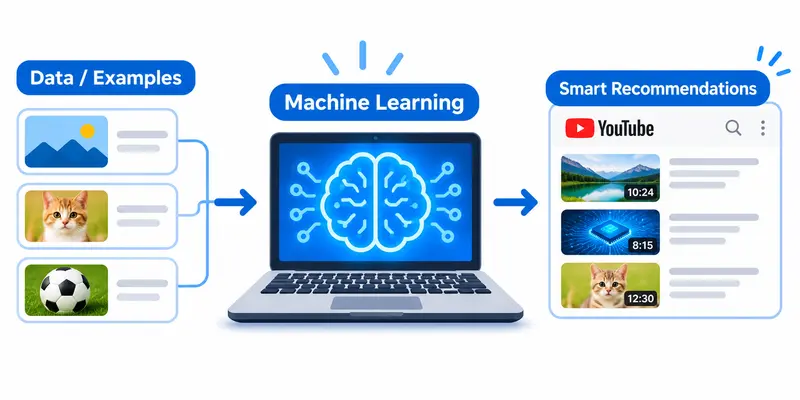
For example, think about YouTube. When you watch videos about technology, YouTube starts suggesting similar videos. It learns from your viewing habits and uses that information to recommend content you may enjoy. This is a real-life example of machine learning.
How Does Machine Learning Work?
Machine learning works by using data to teach computers how to find patterns and make predictions. It helps computers learn from past examples and improve their results over time. Instead of following fixed instructions, computers study data and use what they learn to solve problems. This process allows machines to make smart decisions and handle new information.
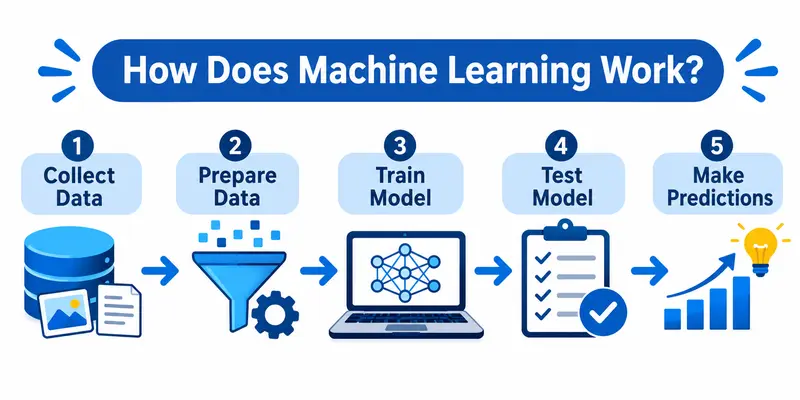
It follows a few simple steps:
- Collect Data: First, the computer collects information, such as images, numbers, or text.
- Prepare Data: The data gets cleaned and organized so the computer can understand it.
- Train the Model: The computer studies the data and learns patterns from different examples.
- Test the Model: The computer uses new data to check how well it has learned.
- Make Predictions: After training, the model uses what it has learned to make predictions or decisions.
What Are the Main Types of Machine Learning?
Machine learning has four main types. Each type teaches computers to learn from data in a different way. Some use labeled examples, while others find patterns on their own.
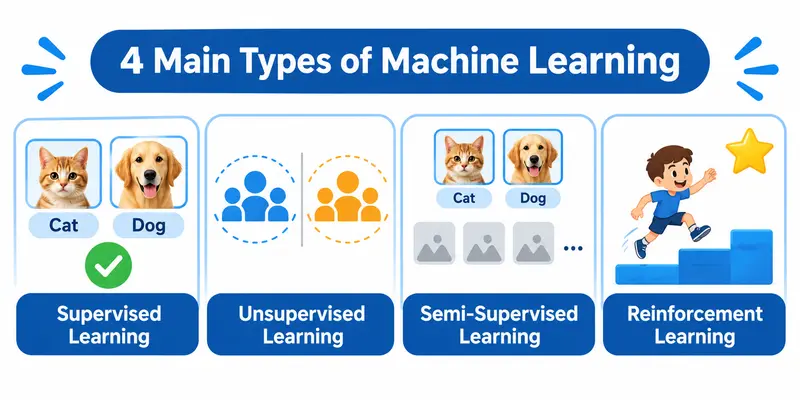
Let’s understand each type with simple examples.
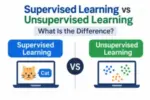
1. Supervised Learning
Supervised learning teaches computers using labeled data. This means the computer learns from examples that already have correct answers.
Example: A computer studies pictures labeled as cats and dogs. Later, it can identify whether a new picture shows a cat or a dog.
2. Unsupervised Learning
Unsupervised learning helps computers find patterns in data without labeled answers. The computer studies the information and groups similar items.
Example: An online store groups customers based on their shopping habits and interests.
3. Semi-Supervised Learning
Semi-supervised learning uses a small amount of labeled data and a large amount of unlabeled data. This helps computers learn from both types of information.
Example: A computer learns to recognize faces using a few labeled pictures and many unlabeled pictures.
4. Reinforcement Learning
Reinforcement learning teaches computers through trial and error. The computer takes actions and receives rewards for good results or penalties for mistakes.
Example: A computer learns to play a video game by trying different moves and earning points when it makes the right choices.
What Are Some Real-Life Applications of Machine Learning?
Machine learning is used in many parts of our daily lives. It helps businesses, banks, hospitals, and online platforms work faster and make better decisions. From watching videos to shopping online, we use machine learning in many ways.
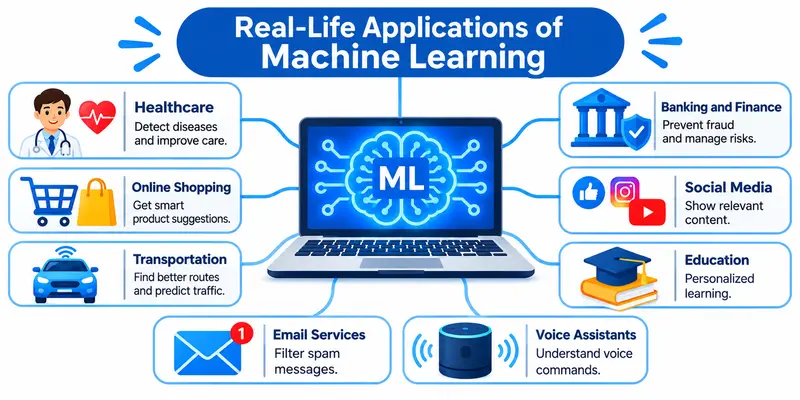
Here are some common real-life applications:
1. Healthcare
Machine learning helps doctors study medical reports, detect diseases, and understand patient information. It can also help find health problems at an early stage.
2. Banking and Finance
Banks use machine learning to detect unusual payments and prevent fraud. It also helps them study spending habits and manage financial risks.
3. Online Shopping
Online stores use machine learning to suggest products based on customer interests and shopping history. For example, Amazon recommends products based on what you search for and buy.
4. Social Media
Platforms like Facebook, Instagram, and TikTok use machine learning to show posts, videos, and ads based on user activity.
5. Transportation
Machine learning helps navigation apps find better routes and predict traffic. It also supports self-driving car technology.
6. Education
Learning platforms use machine learning to suggest lessons and study materials based on student progress. It helps students learn at their own pace.
7. Email Services
Email services use machine learning to identify spam messages and move unwanted emails into the spam folder.
8. Voice Assistants
Tools like Siri, Google Assistant, and Alexa use machine learning to understand voice commands and answer questions.
What Are the Benefits of Machine Learning?
Machine learning offers many benefits in everyday life and business. It helps computers learn from data, complete tasks faster, and make better decisions. Many industries use it to save time, reduce mistakes, and improve their services.
Here are some important benefits of machine learning:
- Saves Time: Machine learning can complete many tasks automatically. It helps people save time and focus on other important work.
- Improves Accuracy: Machine learning studies large amounts of data and finds useful patterns. It can help reduce human errors and improve results.
- Automates Tasks: It helps computers perform repeated tasks without constant human help. For example, email services use it to detect spam messages.
- Better Decision-Making: Machine learning studies data and provides useful information. Businesses use these results to make better decisions.
- Handles Large Amounts of Data: It can process large amounts of information quickly. This helps businesses find useful patterns that people may miss.
- Personalizes User Experience: Machine learning learns about user interests and suggests useful content. For example, YouTube recommends videos based on your viewing habits.
- Helps Different Industries:It supports many fields, including healthcare, education, banking, shopping, and transportation.
Overall, machine learning helps people save time, improve work, and solve problems more efficiently.
What Are the Challenges of Machine Learning?
Machine learning offers many benefits, but it also has some challenges. It needs good-quality data, proper training, and powerful computer systems to produce useful results. Sometimes, it can also make mistakes or give incorrect predictions.
Here are some common challenges of machine learning:
- Requires Large Amounts of Data: Machine learning models often need a lot of data to learn properly. Collecting enough useful information can take time and effort.
- Poor Data Quality: Incorrect, missing, or outdated data can affect results. Poor data can teach a computer the wrong patterns.
- High Costs: Building and training some machine learning models requires powerful computers, special tools, and skilled workers. This can increase costs.
- Privacy and Security Risks: Machine learning systems may use personal information, such as names, locations, and shopping habits. Companies must protect this data from misuse.
- Bias in Data:If training data contains unfair patterns, the machine learning model may produce unfair results. For example, a hiring system may favor some job applicants over others.
- Requires Skilled People: Building and managing machine learning models requires knowledge of programming, mathematics, and data analysis. Beginners may need time to learn these skills.
- Wrong Predictions: Machine learning models can sometimes give incorrect answers. Their results depend on the quality of data and how well people train them.
Understanding these challenges helps people use machine learning more carefully and get better results.
What Is the Difference Between Machine Learning and Deep Learning?
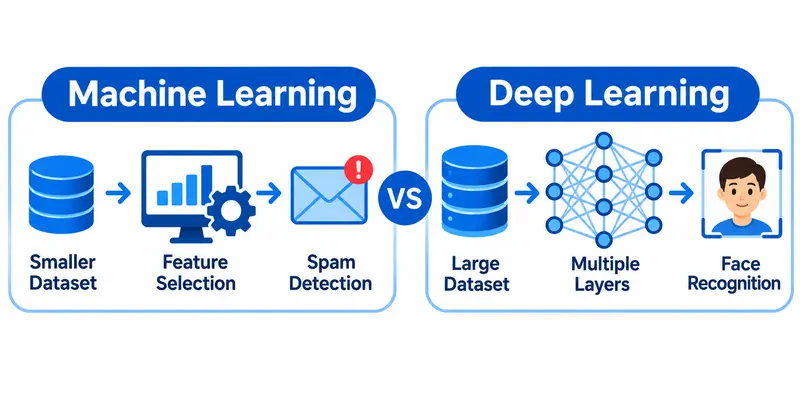
Machine learning and deep learning are both parts of artificial intelligence (AI). They help computers learn from data and solve problems. However, they work in different ways.
Machine learning often needs people to select useful features from data. Deep learning uses layers of artificial neural networks to learn patterns from large amounts of data. These networks work in a way that is loosely inspired by the human brain.
Here are the main differences:
| Machine Learning | Deep Learning |
| Uses different methods to learn from data. | Uses deep neural networks. |
| Often works with smaller datasets. | Usually needs large amounts of data. |
| May need people to select important features. | Can learn important features automatically. |
| Often needs less computing power. | Usually needs more computing power. |
| Example: Detecting spam emails. | Example: Recognizing faces in pictures. |
How Can Beginners Start Learning Machine Learning?
Learning machine learning may seem difficult at first, but beginners can learn it step by step. You do not need to be an expert in programming or mathematics to get started. Begin with the basics and practice with simple projects.
Here are some steps to help you start learning machine learning:
Learn the Basics of Python
Python is one of the most popular programming languages for machine learning. Start by learning variables, loops, functions, lists, and basic programming concepts.
Understand Basic Mathematics
Learn basic mathematics, especially algebra, statistics, and probability. These topics help you understand how machine learning models work.
Learn Machine Learning Basics
Understand important concepts like data, algorithms, models, training, and predictions. Also, learn the main types of machine learning.
Practice with Python Libraries
Explore useful Python libraries such as:
- NumPy: Helps work with numbers and calculations.
- Pandas: Helps organize and analyze data.
- Matplotlib: Helps create charts and graphs.
- Scikit-learn: Helps build basic machine learning models.
Work on Small Projects
Start with simple projects to practice what you learn. For example:
- Predict house prices.
- Identify spam emails.
- Predict student exam results.
- Classify pictures of cats and dogs.
Use Free Learning Resources
You can use online platforms to learn machine learning without spending money.
- Google Machine Learning Crash Course: Offers free lessons and practical exercises.
- Kaggle: Provides free datasets and beginner projects.
- YouTube: Offers free Python and machine learning tutorials.
Practice Regularly
Practice is important when learning machine learning. Spend some time each day writing Python code, exploring data, and building small projects. Start with simple tasks and slowly move to harder ones.
Following these steps will help you build a strong foundation in machine learning. Start with Python, understand the basic concepts, and practice with small projects. With regular practice, you can gradually learn to build your own machine learning models.
What Is the Future of Machine Learning?
The future of machine learning looks promising. It is growing fast and changing how people live and work. Many companies use machine learning to solve problems, save time, and improve their services. In the coming years, it will play an even bigger role in technology and everyday life.
Here are some important areas where machine learning may grow:
Better Healthcare
Machine learning will help doctors detect diseases earlier, study medical reports, and improve patient care.
Smarter Education
Learning platforms will use machine learning to provide lessons based on each student’s needs and learning speed.
Self-Driving Cars
Machine learning will help cars understand roads, recognize traffic signs, and make safer driving decisions.
Improved Cybersecurity
Companies will use machine learning to detect online threats, identify unusual activity, and protect important information.
Growth of AI Tools
More AI tools will use machine learning to create content, answer questions, understand images, and complete daily tasks.
More Business Automation
Businesses will use machine learning to handle repeated tasks, study customer needs, and improve their work.
New Career Opportunities
As machine learning grows, companies may need more skilled people in areas like data science, AI development, and machine learning engineering.
Machine learning will continue to shape the future of technology. Learning its basic concepts today can help beginners understand new AI tools and prepare for future opportunities.
Conclusion
Machine learning is changing the way we live, work, and use technology. In this guide, we explored what machine learning is, how it works, its main types, real-life applications, benefits, and challenges. We also learned how it differs from traditional programming and deep learning and how beginners can start learning it.
My recommendation is to start with basic Python, understand simple machine learning concepts, and practice with small projects. You do not need to learn everything at once. Take one step at a time and keep practicing.
Now that you understand the basics of machine learning, explore more AI guides on our website and start building your knowledge of this growing technology.
FAQs
No, machine learning is not too difficult for beginners if they learn it step by step. You can start with basic computer skills, Python programming, and simple machine learning concepts. You do not need advanced math or coding skills at the beginning. Start with small projects and practice regularly to build your confidence.
Yes, you can understand basic machine learning concepts without coding. Some online tools allow you to create simple machine learning models without writing code.
- Google Teachable Machine: Train simple models using images, sounds, or body movements.
- No-code AI platforms: Build basic AI solutions with visual tools.
- Online courses: Learn how machine learning works through videos and practical examples.
However, learning Python will help you build more advanced machine learning projects.
You can learn the basic concepts of machine learning in a few weeks with regular practice. However, becoming comfortable with Python, data handling, and machine learning projects usually takes several months. Your learning speed depends on your study time and previous knowledge. Focus on understanding each concept instead of rushing through lessons.
Python is the best starting language for most beginners who want to learn machine learning. It has simple syntax and many useful libraries.
Some popular Python libraries include:
- NumPy: Helps with numerical calculations.
- Pandas: Helps organize and analyze data.
- Scikit-learn: Helps build basic machine learning models.
- TensorFlow and PyTorch: Help develop more advanced machine learning and deep learning models.
Yes, machine learning can make predictions about future events by studying past data and finding patterns. However, it cannot predict the future with complete accuracy.
For example, machine learning can help:
- Predict product demand for businesses.
- Estimate weather conditions.
- Identify possible financial risks.
- Predict when machines may need repairs.
The quality of these predictions depends on the data and the model.
Data is important because machine learning models use it to learn patterns and make predictions. Good-quality data helps a model produce more useful results, while incomplete or incorrect data can lead to poor predictions.
For example, a model that identifies spam emails needs examples of both spam and normal emails. The more useful and relevant the training data, the better the model can learn the difference.
Yes, machine learning can be a good career choice because many industries use it to solve problems and improve their services. However, it requires regular learning, coding practice, and problem-solving skills.
Some career options include:
- Machine Learning Engineer
- Data Scientist
- AI Engineer
- Data Analyst
- Machine Learning Researcher
Beginners should build a strong foundation in Python, mathematics, and data analysis before applying for advanced roles.
You can learn machine learning through free online courses, tutorials, and practice platforms. These resources are useful for beginners:
- Google Machine Learning Crash Course: Learn basic machine learning concepts.
- Kaggle: Practice with real datasets and beginner projects.
- YouTube: Follow free Python and machine learning tutorials.
- Scikit-learn documentation: Learn how to use machine learning tools.
Choose one learning resource and follow it consistently instead of switching between many courses.
Use machine learning when a task involves patterns or predictions that are difficult to describe with fixed rules. Traditional programming works better when you can clearly define every step of a task.
For example:
- Traditional programming: Calculate the total price of products using fixed mathematical rules.
- Machine learning: Identify spam emails by learning patterns from previous email examples.

- Be Respectful
- Stay Relevant
- Stay Positive
- True Feedback
- Encourage Discussion
- Avoid Spamming
- No Fake News
- Don't Copy-Paste
- No Personal Attacks
- Be Respectful
- Stay Relevant
- Stay Positive
- True Feedback
- Encourage Discussion
- Avoid Spamming
- No Fake News
- Don't Copy-Paste
- No Personal Attacks
